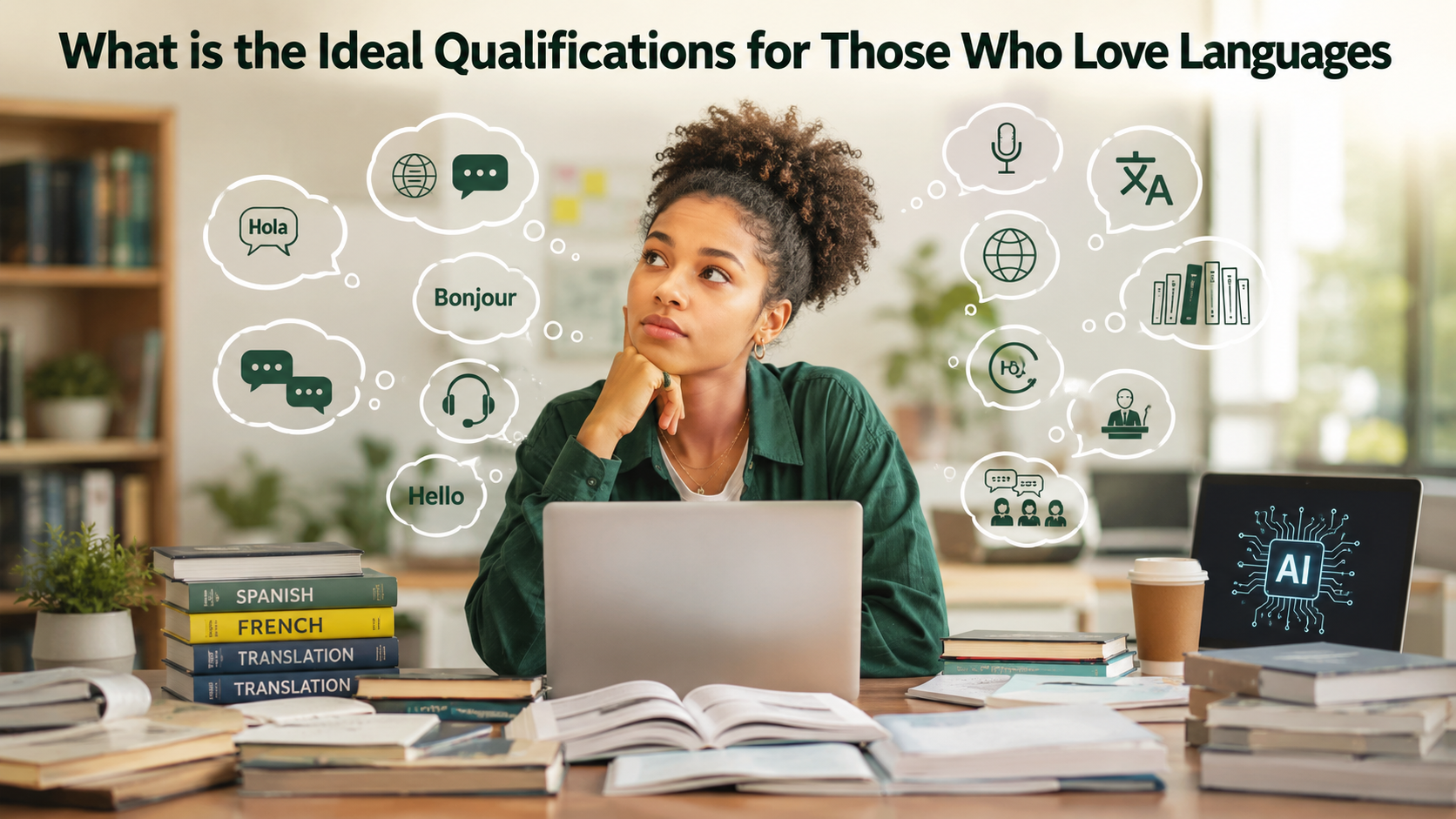
What is the Ideal Qualifications for Those Who Love Languages
Career Options
Some people naturally gravitate towards numbers, systems, and technical problems.
They enjoy reading, writing, learning new languages, expressing ideas, debating viewpoints, and understanding how communication shapes the world around us. If this sounds like you, choosing the right qualification is about more than finding a job. It’s about finding a path that allows you to use one of your greatest natural strengths. The good news is that language skills remain valuable across many industries. The challenge is understanding where opportunities are growing and how emerging technologies like Artificial Intelligence are changing the landscape.
Why Language Skills Still Matter
With tools like ChatGPT, Google Gemini, and automated translation software becoming more common, many learners wonder whether language-based careers still have a future. The answer is yes. However, the nature of the work is changing. AI can generate content, translate text, and assist with communication tasks. What it struggles to do consistently is understand context, emotion, cultural nuance, persuasion, ethics, and strategic communication.
Businesses, governments, schools, media organisations, and legal institutions still rely on people who can think critically, communicate effectively, and adapt messages to different audiences. Language skills are becoming more valuable when combined with other skills.
Qualifications Worth Considering
Language and Linguistics
A qualification in languages or linguistics focuses on how language works, how people communicate, and how meaning is created.
Potential careers include:
* Translator
* Interpreter
* Language specialist
* Lexicographer
* Linguistics researcher
* AI language trainer
As AI language models continue to develop, organisations increasingly need specialists who understand language structure, context, and communication patterns.
Journalism and Media Studies
For those who enjoy storytelling, research, and current affairs, journalism remains a strong option.
Career opportunities include:
* Journalist
* News reporter
* Content producer
* Editor
* Broadcaster
* Media strategist
While AI can generate basic content, investigative journalism, interviewing, and storytelling still depend heavily on human judgement.
Communication and Public Relations
Communication qualifications prepare students to manage information, reputation, and public messaging.
Career opportunities include:
* Public relations practitioner
* Corporate communicator
* Internal communications specialist
* Brand manager
* Media liaison
In a world overloaded with information, organisations need people who can communicate clearly and build trust.
Education and Teaching
Language-loving individuals often enjoy helping others learn.
Teaching remains one of the most direct ways to use communication skills daily.
Possible pathways include:
* English teacher
* Language teacher
* Learning facilitator
* Curriculum developer
* Educational content creator
The demand for quality educators continues both locally and internationally.
Law
Law is often overlooked by learners who enjoy language. However, legal professionals spend much of their time reading, analysing, interpreting, writing, and presenting arguments.
Strong language skills can be a significant advantage in careers such as:
* Attorney
* Advocate
* Legal researcher
* Compliance specialist
* Policy analyst
Marketing and Content Creation
Modern marketing is built on communication. Businesses need people who can understand audiences, tell compelling stories, and create meaningful content.
Relevant qualifications include:
* Marketing
* Digital Marketing
* Brand Management
* Strategic Communication
Potential careers include:
* Copywriter
* Content strategist
* Social media manager
* SEO specialist
* Brand strategist
Emerging Opportunities in the AI Era.
One of the biggest misconceptions is that AI will eliminate all language-related careers. The reality is more complex. AI is changing jobs, not necessarily removing them. New opportunities are emerging for people who understand both language and technology.
Examples include:
* AI content editor
* Prompt designer
* Conversational AI specialist
* Language data analyst
* AI training specialist
* User experience writer
* Technical communicator
The future may belong to individuals who can combine language expertise with digital literacy.
Risks and Challenges of AI for Language Careers
It would be irresponsible to discuss language careers without acknowledging the risks.
AI is already capable of producing:
* Basic articles
* Marketing copy
* Product descriptions
* Simple translations
* Customer service responses
This means routine writing tasks may become increasingly automated. As a result, language professionals who only perform basic writing tasks could face greater competition.
The strongest protection against this risk is developing skills that AI struggles to replicate, such as:
* Critical thinking
* Creativity
* Strategic communication
* Relationship building
* Ethical decision-making
* Cultural understanding
* Complex problem solving
The goal should not be competing against AI.
The goal should be learning how to work alongside it.
Many learners ask:
“What qualification should I study?”
A better question is:
“How do my strengths align with real opportunities?”
Loving languages is a valuable starting point, but career satisfaction usually comes from understanding how your interests, thinking style, motivations, and work preferences fit together.
A qualification opens doors. Self-awareness helps you choose the right one. That is why career decisions should begin with understanding yourself before choosing a course, qualification, or career path. This principle sits at the core of the GAIT Career Assessment approach, which aims to connect individual strengths and thinking styles with real-world career opportunities.
Frequently Asked Questions
What degree is best for someone who loves languages?
There is no single best degree. Popular options include linguistics, journalism, communication, education, law, international relations, and marketing.
Can AI replace translators and writers?
AI can automate some tasks, but human expertise remains essential for complex communication, cultural understanding, creativity, and strategic messaging.
Are language careers still in demand?
Yes. Communication, education, marketing, media, law, and AI-related industries continue to require strong language and communication skills.
What careers combine language and technology?
Examples include AI language specialist, content strategist, UX writer, technical writer, prompt designer, and conversational AI developer.
Can I earn a good income in a language-related career?
Yes. Income often depends on specialisation, experience, industry, and how well language skills are combined with other valuable skills such as business, technology, law, or marketing.