Understanding Your Skills: The Complete Skills Spectrum for Career Success
Decision Making
When most people think about skills, they immediately think about what subjects they perform well in at school. They might say they are good at mathematics, writing, science, or computers.
But skills are far broader than academic performance.
Some people excel at analysing information. Others naturally lead teams. Some are exceptional communicators, while others solve practical problems with remarkable efficiency. Many people underestimate their strengths simply because they view skills through a narrow lens. Understanding your skills is one of the most important steps toward making better career decisions. The problem is not that most people lack skills.
The problem is that most people do not fully understand the range of skills they already possess.
What Is a Skills Spectrum?
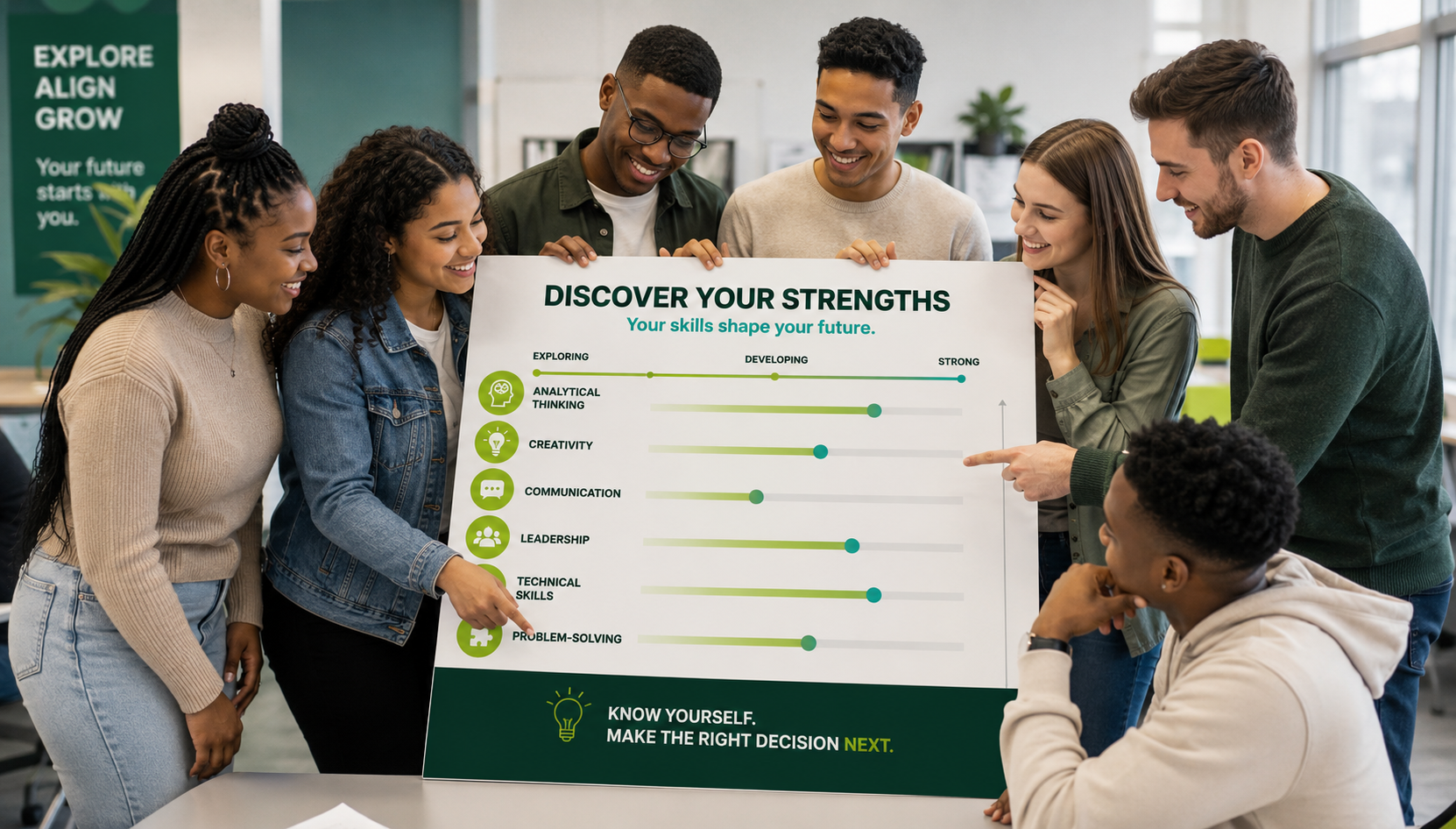
A skills spectrum is the complete range of abilities, behaviours, and strengths that influence how a person performs in learning, work, and life. Rather than placing people into a single category, the skills spectrum recognises that individuals possess different combinations of strengths.
Your skills profile may include:
• Thinking skills
• Communication skills
• Technical skills
• Leadership skills
• Creative skills
• Practical skills
• Interpersonal skills
• Organisational skills
The combination of these abilities creates a unique personal profile.
Cognitive Skills: How You Think
Cognitive skills influence how you process information and solve problems.
These skills include:
• Critical thinking
• Logical reasoning
• Analysis
• Decision-making
• Strategic thinking
• Pattern recognition
Many careers rely heavily on cognitive skills. Engineers, accountants, scientists, software developers, researchers, and business analysts often depend on strong analytical thinking. However, cognitive ability is not limited to academic professions. Every industry benefits from people who can think clearly and solve problems effectively.
Behavioural Skills: How You Work
Behavioural skills influence how you approach tasks, responsibilities, and workplace challenges.
Examples include:
• Reliability
• Discipline
• Adaptability
• Initiative
• Persistence
• Attention to detail
Two individuals may have identical qualifications, yet achieve very different outcomes because their behavioural strengths differ significantly. Employers often place enormous value on these skills because they influence day-to-day performance.
People Skills: How You Interact With Others
People skills are increasingly important in modern workplaces.
These include:
• Communication
• Active listening
• Empathy
• Teamwork
• Conflict resolution
• Relationship building
Careers in education, healthcare, sales, management, customer service, and human resources often depend heavily on interpersonal effectiveness. Strong people skills can often become a significant competitive advantage.
Technical Skills: What You Can Do
Technical skills are the practical abilities required to perform specific tasks.
Examples include:
• Coding
• Graphic design
• Accounting
• Data analysis
• Mechanical repair
• Electrical installation
• Digital marketing
Technical skills are often easier to measure because they involve specific knowledge or competencies. However, technical ability alone rarely determines long-term success.
Creative Skills: How You Generate Ideas
Creative skills involve producing original ideas, solutions, designs, and approaches.
Examples include:
• Innovation
• Design thinking
• Storytelling
• Artistic expression
• Content creation
• Product development
Creativity is valuable far beyond traditional creative industries. Businesses increasingly need individuals who can think differently and solve new problems.
Leadership Skills: How You Influence Others
Leadership is not limited to management positions.
Leadership skills include:
• Decision-making
• Accountability
• Vision
• Motivation
• Delegation
• Coaching
Many successful professionals demonstrate leadership long before they receive a formal leadership title.
Why Understanding Your Skills Matters for Career Decisions
Many people choose careers based on popularity, income potential, or external pressure. A better approach is to understand yourself first.
When you understand your skills, you can:
• Choose more suitable study pathways
• Identify careers that align with your strengths
• Improve confidence
• Develop weaker areas strategically
• Make more informed long-term decisions
Career success is often the result of alignment rather than effort alone.
How to Discover Your Skills Spectrum
Developing self-awareness requires intentional reflection.
Ask yourself:
• What tasks do I learn quickly?
• What problems do people ask me to solve?
• What activities energise me?
• What environments help me perform best?
• Which achievements came most naturally to me?
Career assessments can also provide valuable insights by identifying patterns in thinking style, behaviour, motivation, and work preferences.
Understanding your skills is not about finding one strength. It is about understanding the complete spectrum of abilities that make you who you are. The more clearly you understand how you think, solve problems, work with others, and approach challenges, the easier it becomes to make confident decisions about your future.
Career clarity starts with self-awareness. And self-awareness starts with understanding your skills.
Frequently Asked Questions:
What is the difference between skills and talents?
Talents are natural abilities, while skills are abilities that can be developed through learning, practice, and experience.
Why is understanding my skills important?
Understanding your skills helps you make better study, career, and development decisions by identifying areas where you are most likely to succeed.
Can skills be improved?
Yes. Most skills improve through practice, experience, coaching, and deliberate learning.
What are transferable skills?
Transferable skills are abilities that can be applied across multiple careers and industries, such as communication, leadership, and problem-solving.
How do career assessments help identify skills?
Career assessments analyse patterns in thinking, behaviour, interests, motivations, and strengths to provide insights into suitable career pathways.